
 Image 1 of 4
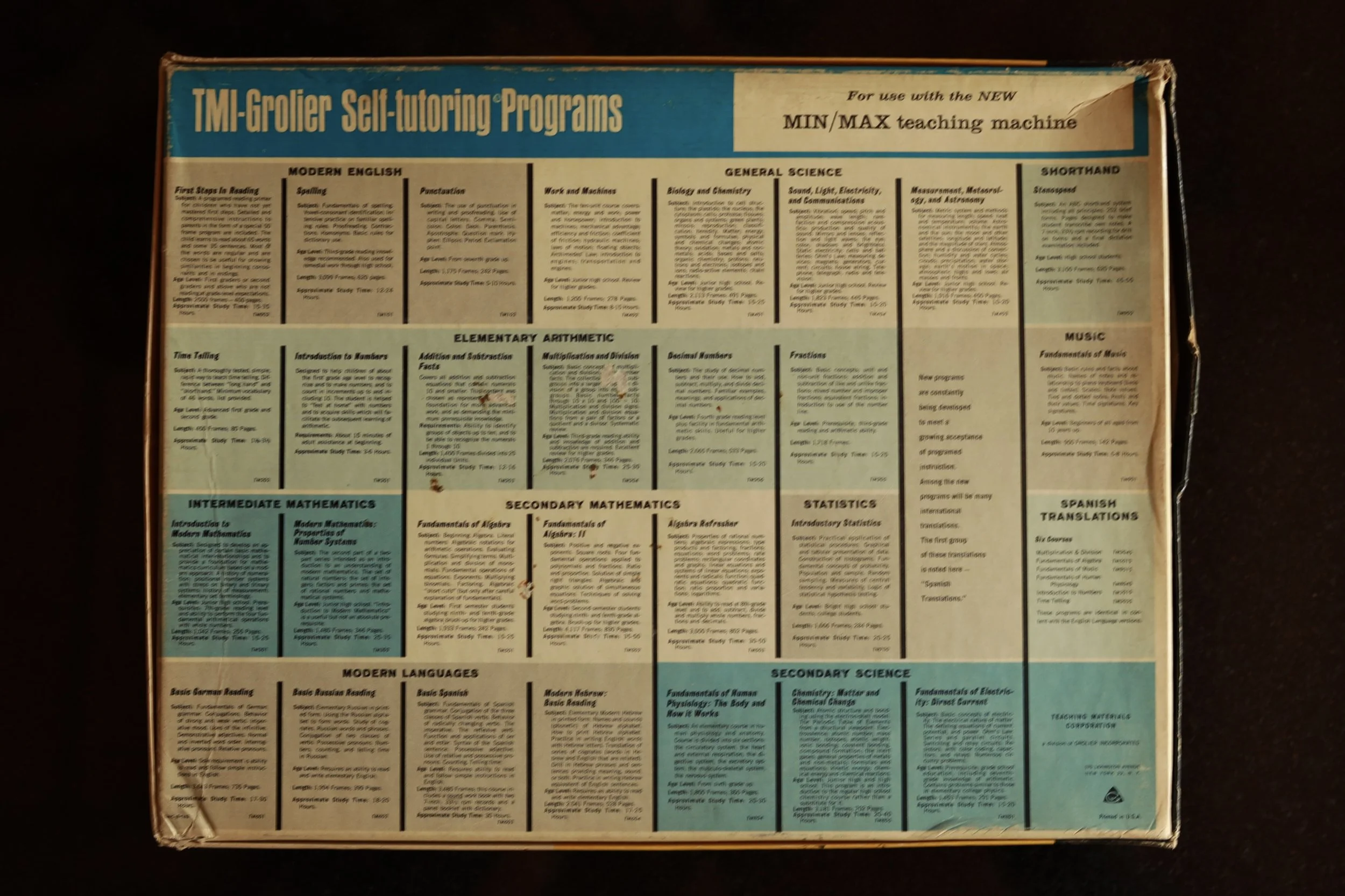 Image 2 of 4
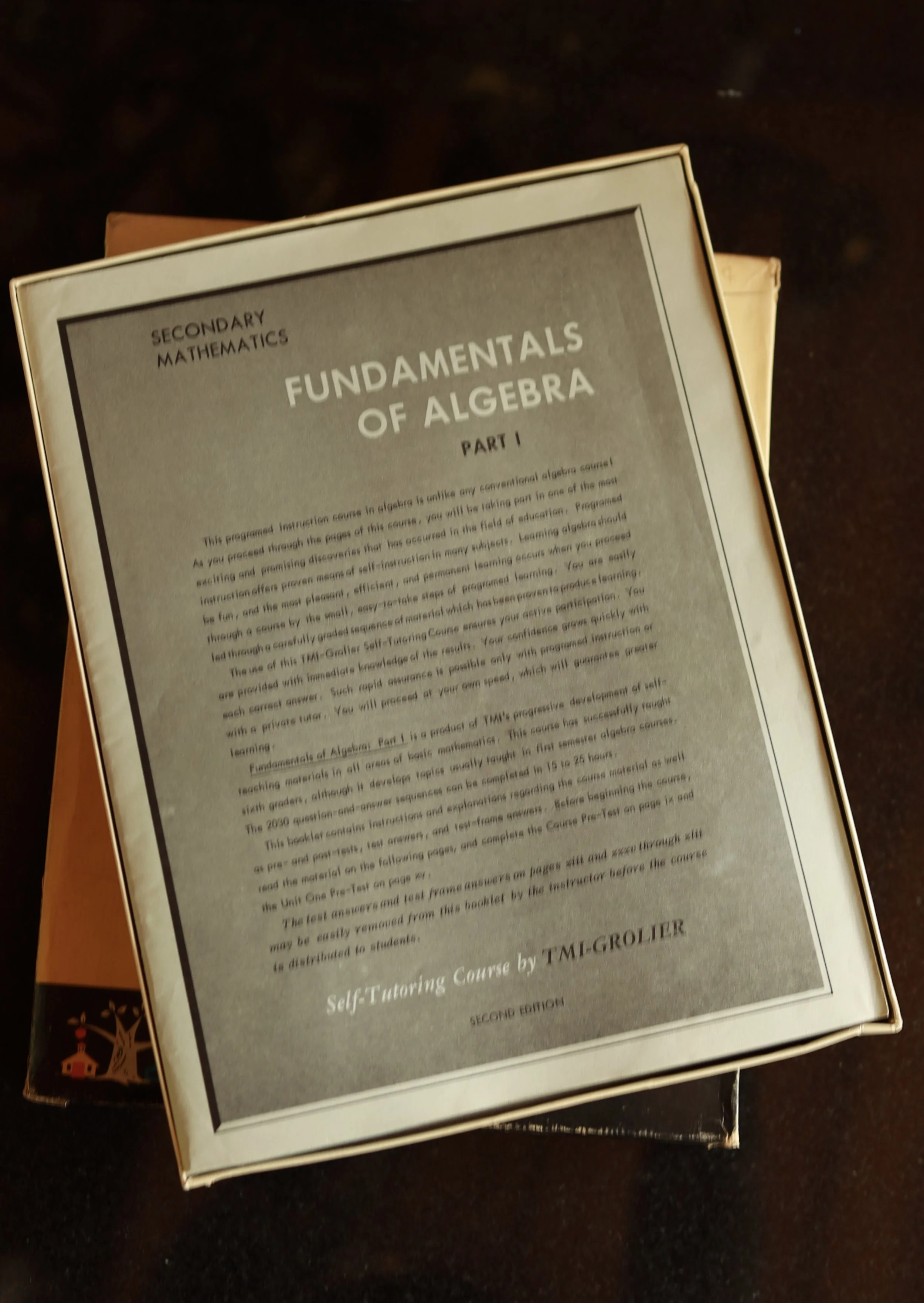 Image 3 of 4
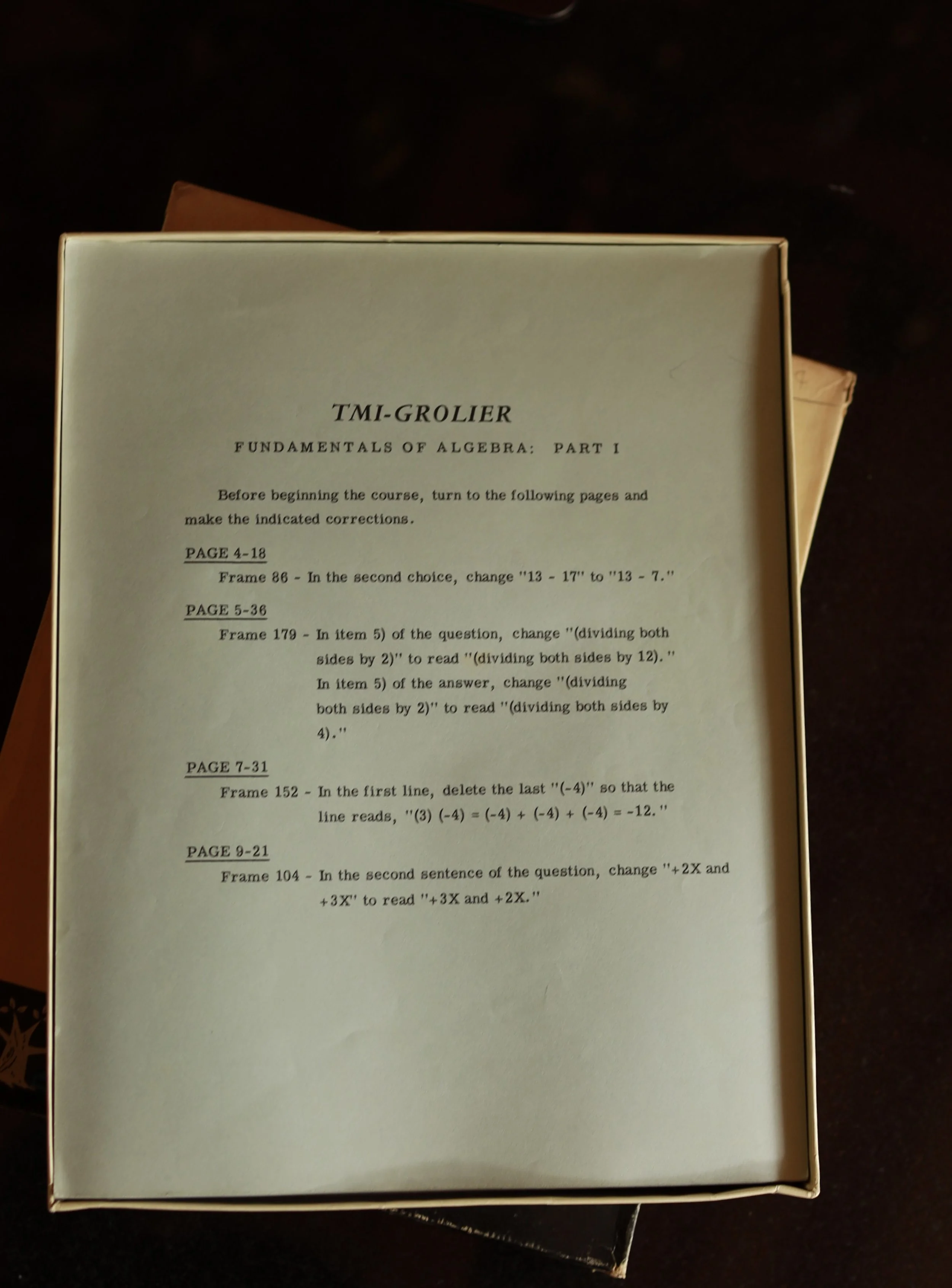 Image 4 of 4
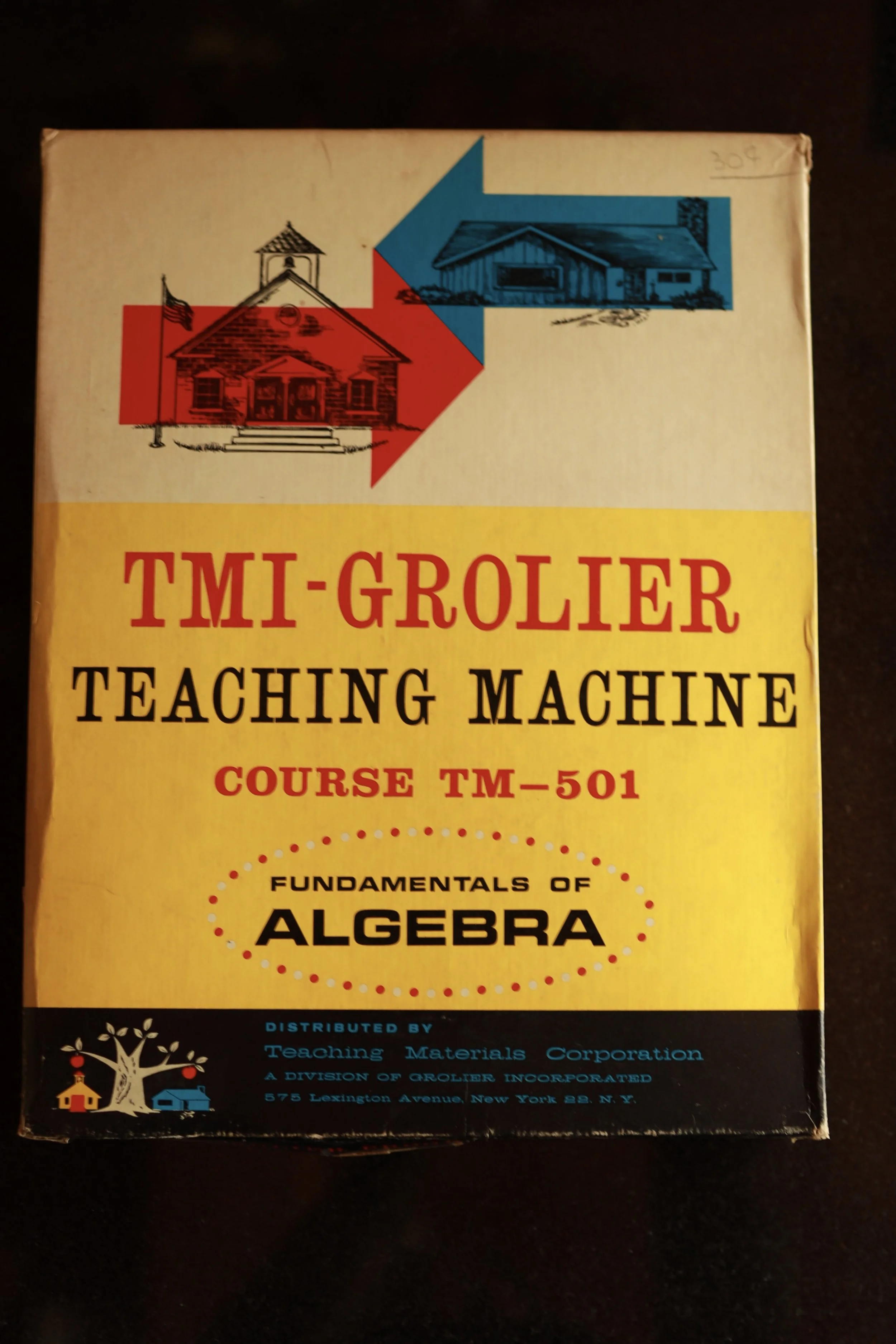
Grolier / TMI, 1966
Instructional course set.
A programmed learning course designed for use with mid-century teaching machines, reflecting the behavioral education movement that flourished in the 1950s and 1960s. Such systems broke subject matter into incremental, self-correcting units intended to reinforce mastery through repetition and immediate feedback.
The “teaching machine” model represents a precursor to computer-assisted instruction, rooted in B.F. Skinner’s theories of operant conditioning. Complete course sets are increasingly uncommon, as components were often separated or discarded.
Original programmed instruction materials
Early educational technology artifact
Complete algebra course component (if complete)
Teaching machines mark an important transitional phase in educational history. They document the pre-digital ambition to mechanize and standardize learning long before personal computers.
Grolier / TMI, 1966
Instructional course set.
A programmed learning course designed for use with mid-century teaching machines, reflecting the behavioral education movement that flourished in the 1950s and 1960s. Such systems broke subject matter into incremental, self-correcting units intended to reinforce mastery through repetition and immediate feedback.
The “teaching machine” model represents a precursor to computer-assisted instruction, rooted in B.F. Skinner’s theories of operant conditioning. Complete course sets are increasingly uncommon, as components were often separated or discarded.
Original programmed instruction materials
Early educational technology artifact
Complete algebra course component (if complete)
Teaching machines mark an important transitional phase in educational history. They document the pre-digital ambition to mechanize and standardize learning long before personal computers.