
 Image 1 of 5
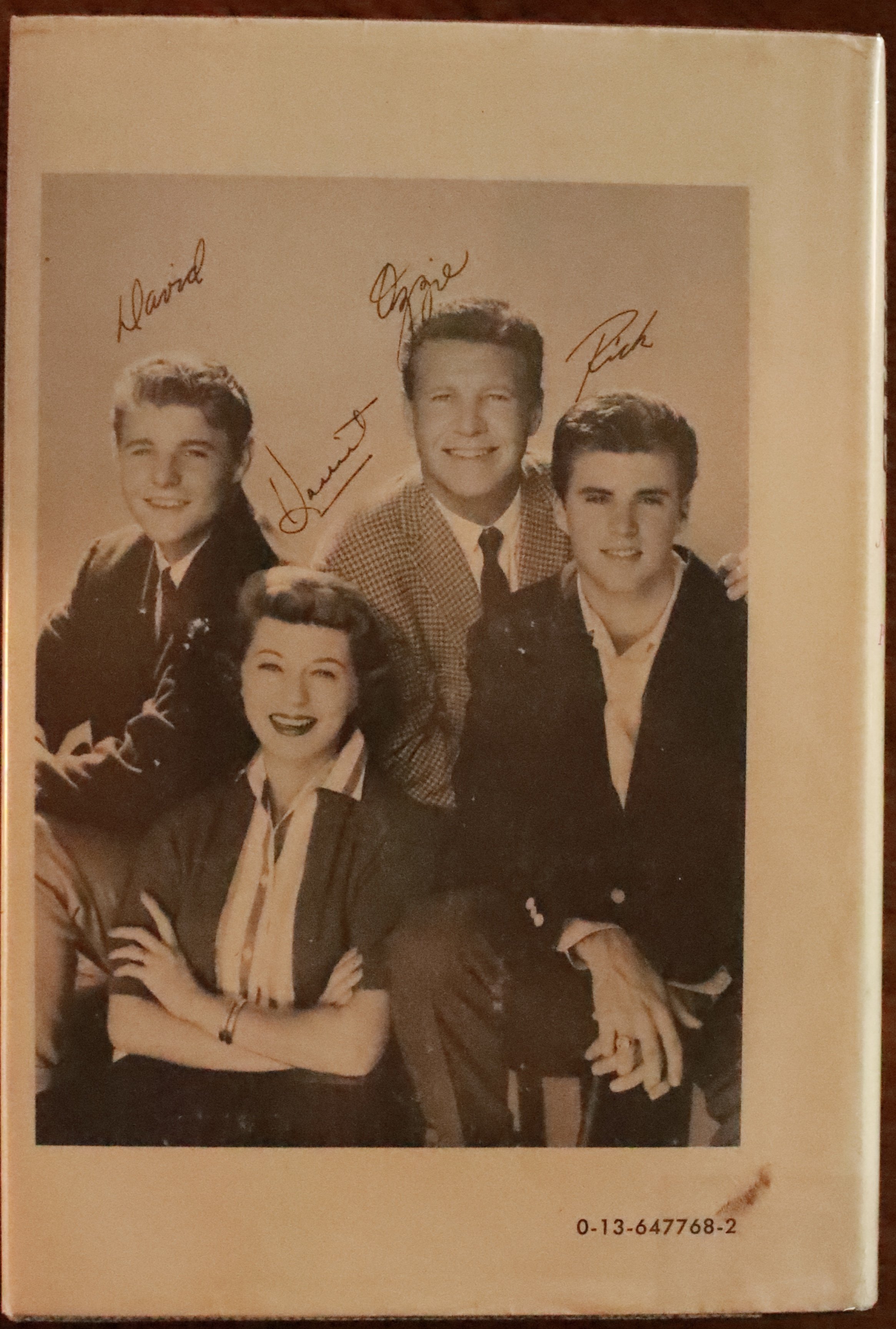 Image 2 of 5
 Image 3 of 5
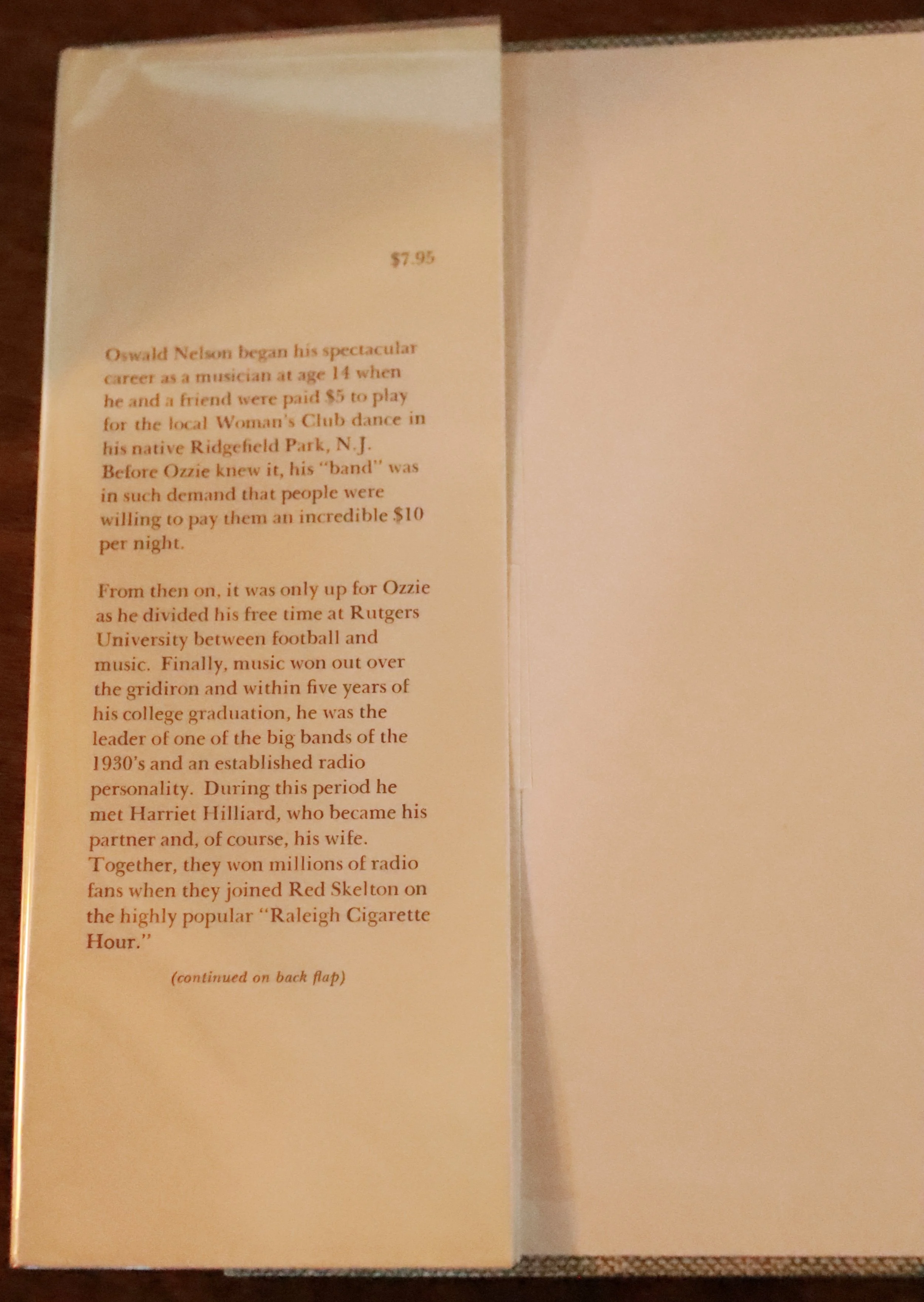 Image 4 of 5
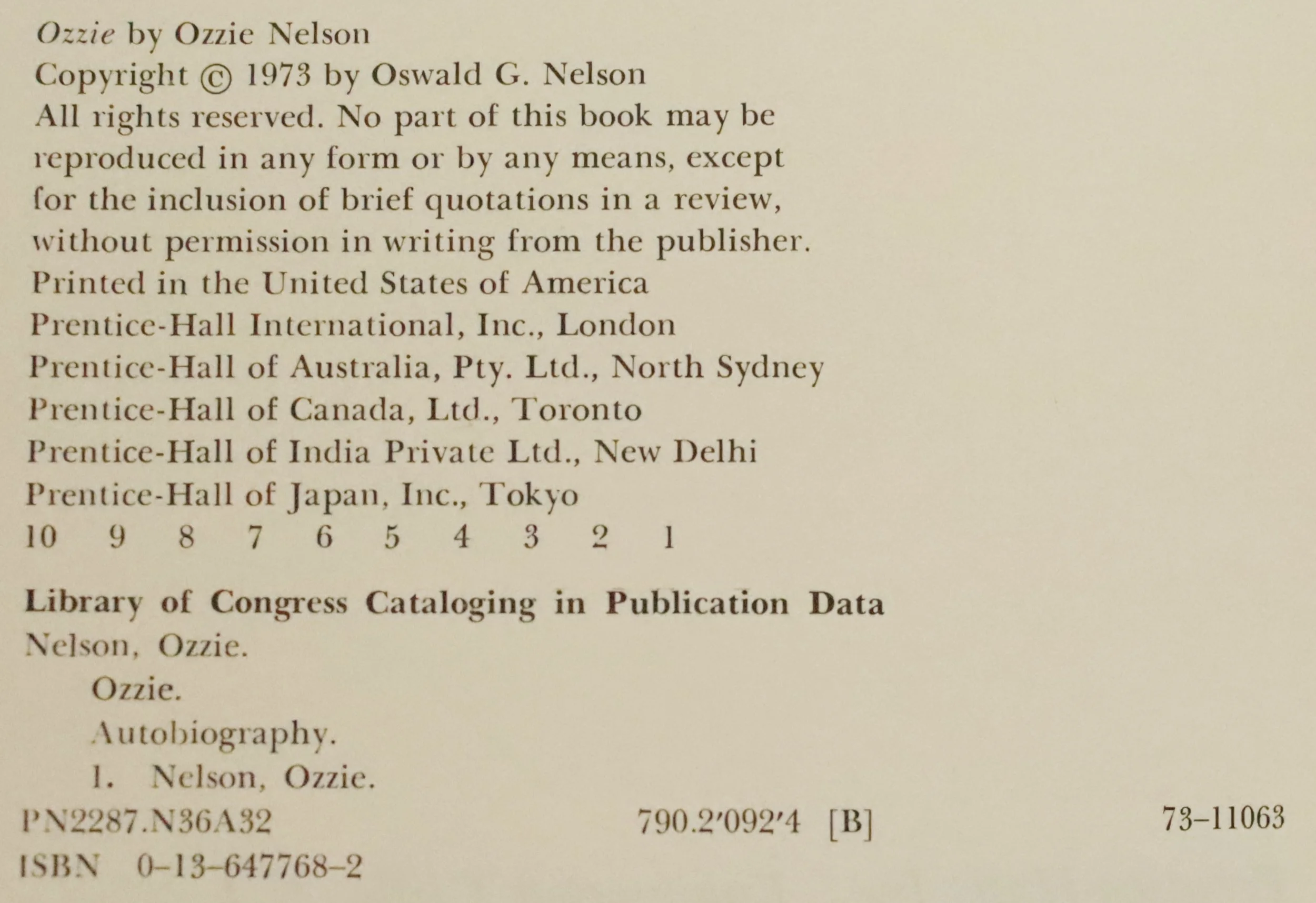 Image 5 of 5
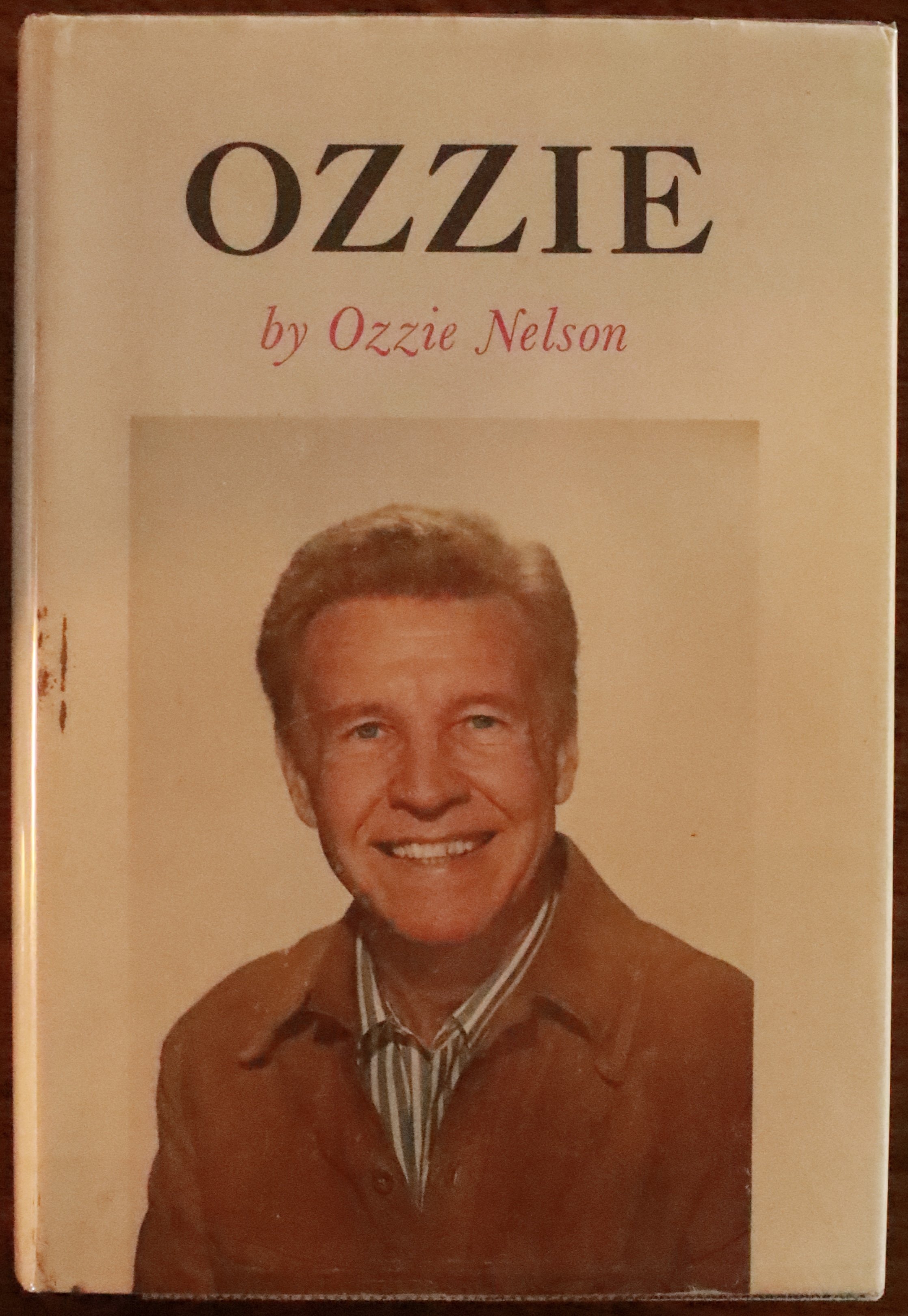
First printing of Ozzie Nelson’s autobiography, published in 1973 by Prentice-Hall International, Inc.
The copyright page displays the complete number line 10 9 8 7 6 5 4 3 2 1, confirming first printing status.
Bound in publisher’s cloth and housed in the original unclipped dust jacket priced at $7.95.
In this reflective memoir, Nelson traces his trajectory from a teenage musician in Ridgefield Park, New Jersey, to national prominence as a bandleader during the golden age of American radio, and ultimately to enduring fame as the architect of one of television’s most recognizable family programs. The narrative situates his musical career within the broader landscape of 1930s and 1940s American entertainment, recounting his transition from big band leadership to broadcasting success alongside Harriet Nelson and their sons. Written in a measured, self-effacing tone characteristic of Nelson’s public persona, the memoir offers insight into mid-century radio culture, early television production, and the shaping of the American domestic ideal on screen.\n\nA well-preserved Near Fine example: clean, square, and unsigned, with no remainder marks. The dust jacket remains unclipped and bright, showing only minimal handling wear. A solid collectible copy of a primary account from a central figure in twentieth-century American broadcasting.
First printing of Ozzie Nelson’s autobiography, published in 1973 by Prentice-Hall International, Inc.
The copyright page displays the complete number line 10 9 8 7 6 5 4 3 2 1, confirming first printing status.
Bound in publisher’s cloth and housed in the original unclipped dust jacket priced at $7.95.
In this reflective memoir, Nelson traces his trajectory from a teenage musician in Ridgefield Park, New Jersey, to national prominence as a bandleader during the golden age of American radio, and ultimately to enduring fame as the architect of one of television’s most recognizable family programs. The narrative situates his musical career within the broader landscape of 1930s and 1940s American entertainment, recounting his transition from big band leadership to broadcasting success alongside Harriet Nelson and their sons. Written in a measured, self-effacing tone characteristic of Nelson’s public persona, the memoir offers insight into mid-century radio culture, early television production, and the shaping of the American domestic ideal on screen.\n\nA well-preserved Near Fine example: clean, square, and unsigned, with no remainder marks. The dust jacket remains unclipped and bright, showing only minimal handling wear. A solid collectible copy of a primary account from a central figure in twentieth-century American broadcasting.