
 Image 1 of 5
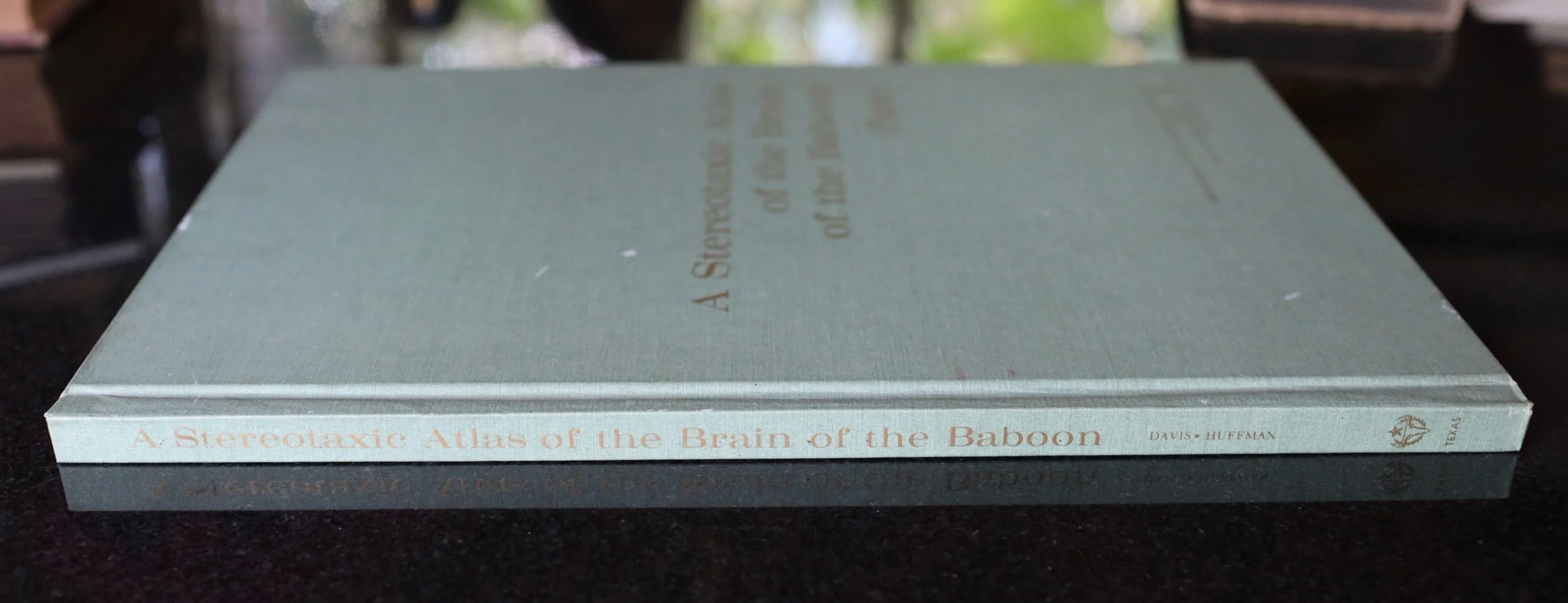 Image 2 of 5
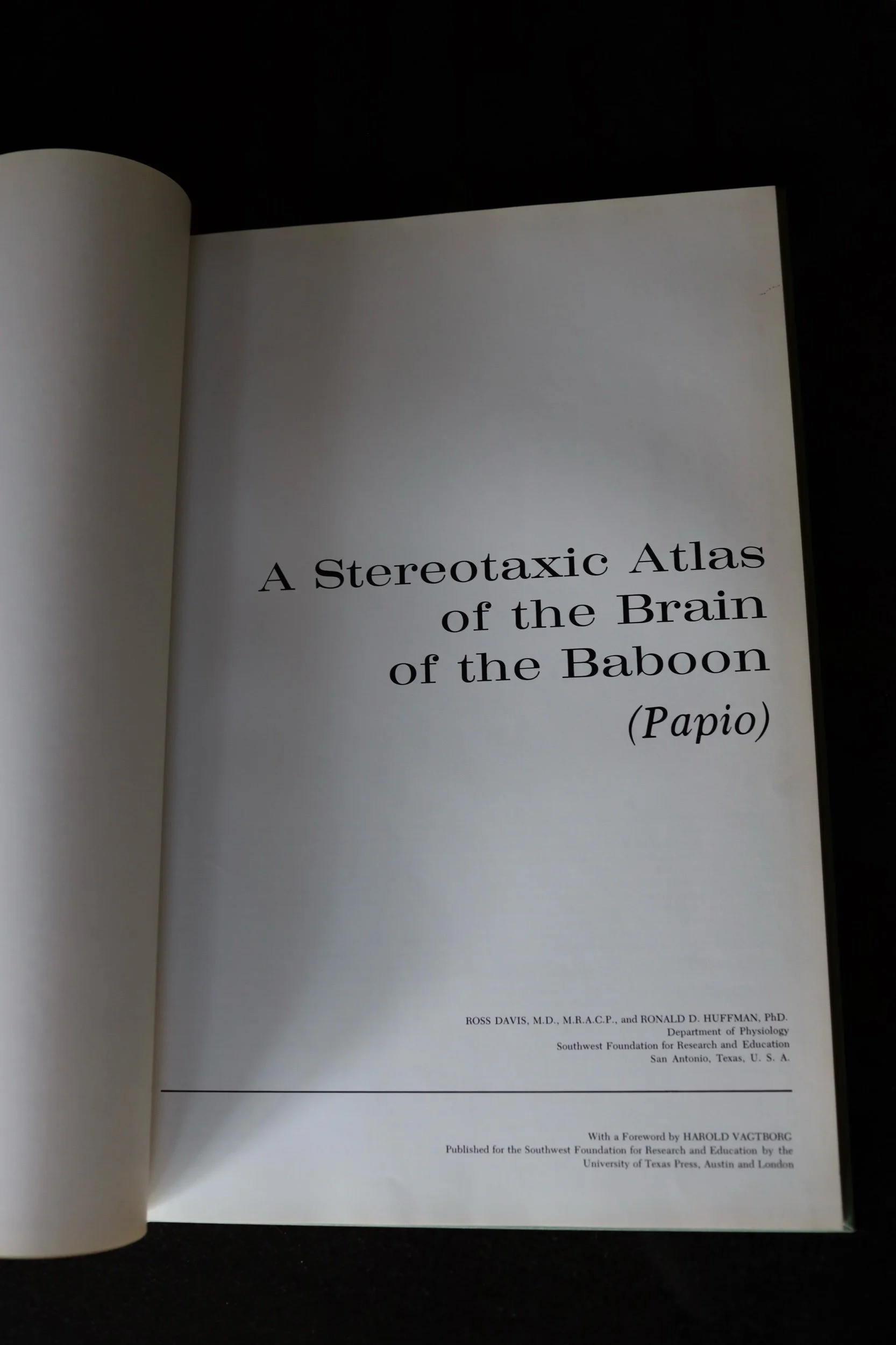 Image 3 of 5
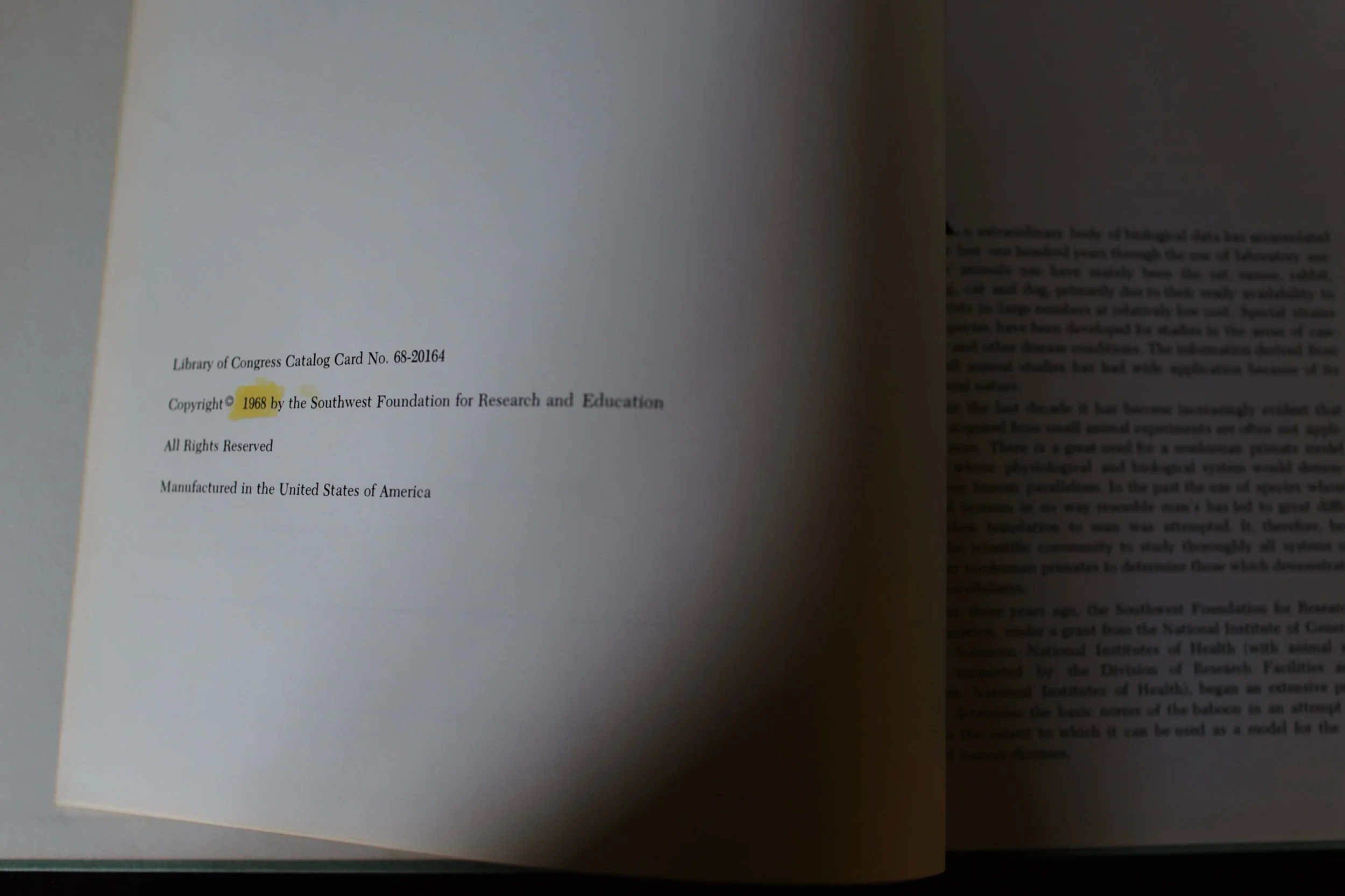 Image 4 of 5
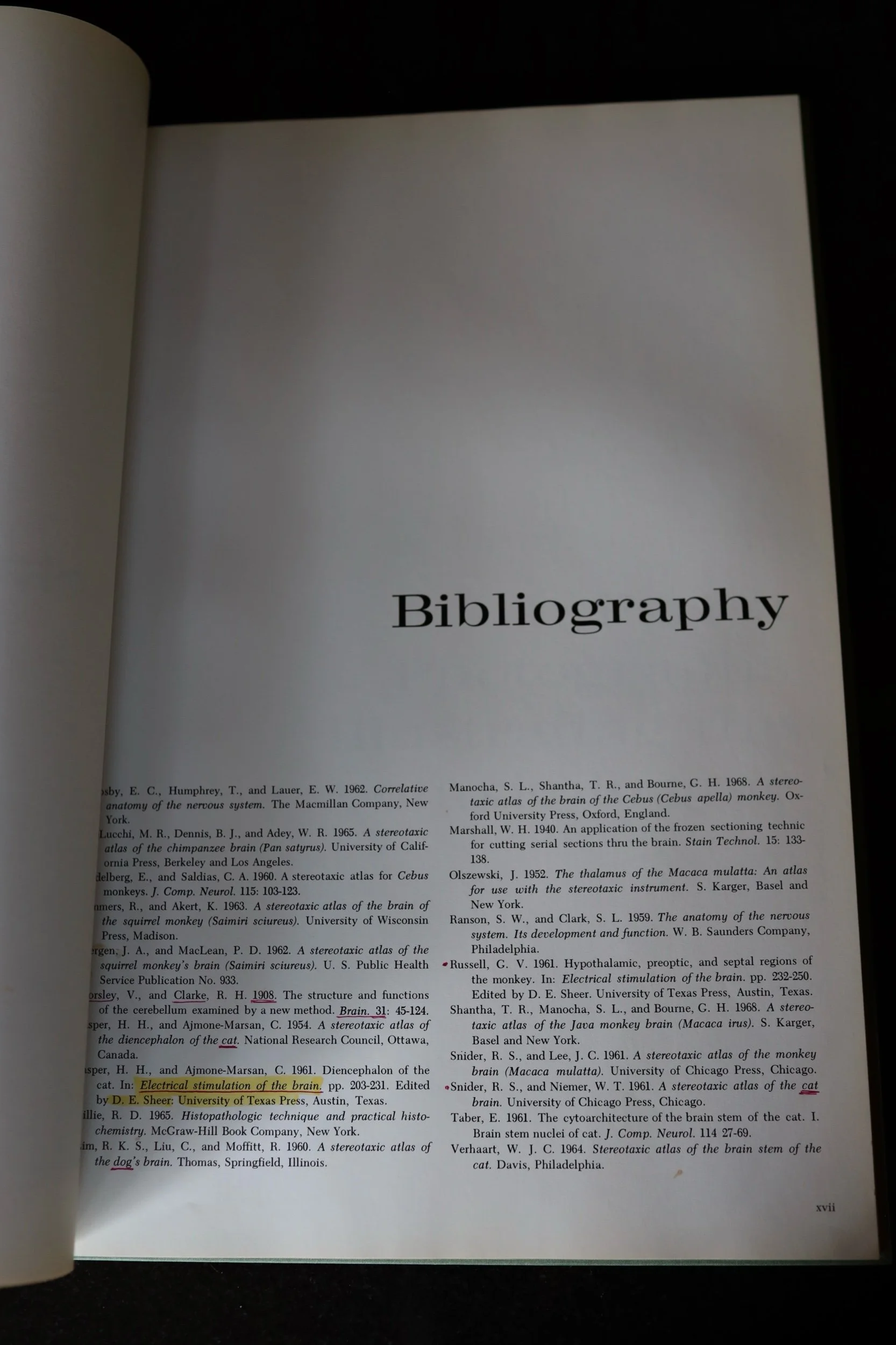 Image 5 of 5
A Stereotaxic Atlas of the Brain of the Baboon (Papio)
Ross Davis, M.D., M.R.A.C.P. & Ronald D. Huffman, Ph.D.
San Antonio: Southwest Foundation for Research and Education, 1968
First Edition
A monumental and highly specialized neuroscientific reference, A Stereotaxic Atlas of the Brain of the Baboon (Papio) is a foundational work in mid-20th-century primate neuroanatomy.
Produced for laboratory and clinical use rather than the trade market, this atlas was designed as a precision instrument, enabling accurate stereotaxic localization within the baboon brain—an essential model for neurological and surgical research prior to the advent of modern imaging technologies. The baboon (Papio) was chosen for its neuroanatomical proximity to humans, making this volume an important artifact in the material history of neuroscience and experimental medicine.
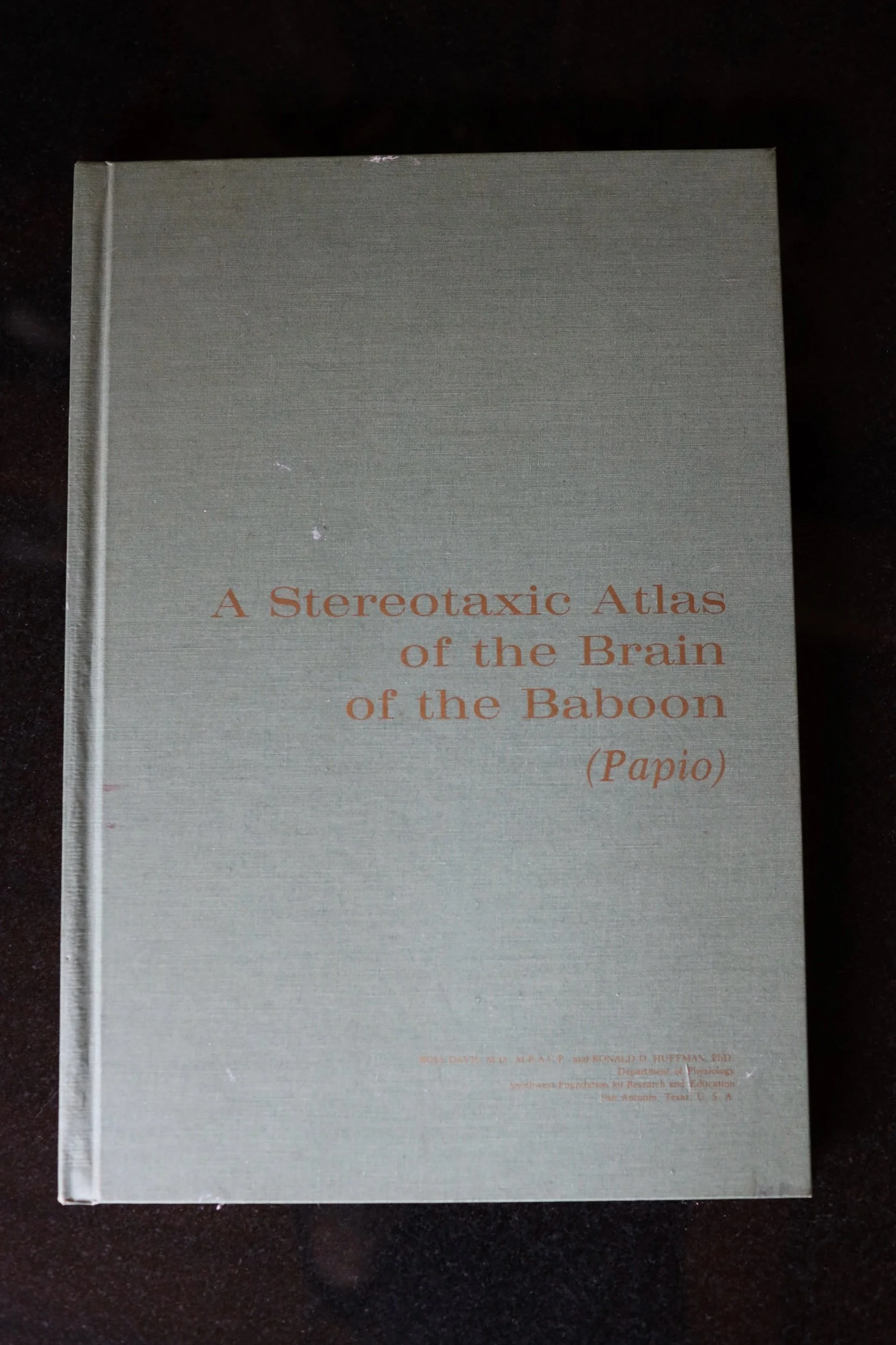
Oversized and austere in presentation, the book exemplifies the seriousness of postwar American scientific publishing. Clean copies were rarely preserved outside institutional settings; most surviving examples show heavy use, library markings, or rebinding. This copy stands out as an unusually well-preserved specimen.
Details
Authors: Ross Davis, M.D., M.R.A.C.P.; Ronald D. Huffman, Ph.D.
Publisher: Southwest Foundation for Research and Education
Place: San Antonio, Texas
Year: 1968
Edition: First (only) edition
Format: Oversized cloth-bound hardcover
Dimensions: 17.5 × 12.25 inches
Condition: Near Fine
Interior: Clean throughout; no annotations, stamps, or institutional markings
Manufactured in: United States of America
Library of Congress Card No.: 68-20164
Why This Copy Matters
Exceptional condition for a working scientific atlas
No institutional ownership marks
Clean, intact plates
Increasingly scarce outside research libraries
Significant as both a scientific tool and historical object
A Stereotaxic Atlas of the Brain of the Baboon (Papio)
Ross Davis, M.D., M.R.A.C.P. & Ronald D. Huffman, Ph.D.
San Antonio: Southwest Foundation for Research and Education, 1968
First Edition
A monumental and highly specialized neuroscientific reference, A Stereotaxic Atlas of the Brain of the Baboon (Papio) is a foundational work in mid-20th-century primate neuroanatomy.
Produced for laboratory and clinical use rather than the trade market, this atlas was designed as a precision instrument, enabling accurate stereotaxic localization within the baboon brain—an essential model for neurological and surgical research prior to the advent of modern imaging technologies. The baboon (Papio) was chosen for its neuroanatomical proximity to humans, making this volume an important artifact in the material history of neuroscience and experimental medicine.
Oversized and austere in presentation, the book exemplifies the seriousness of postwar American scientific publishing. Clean copies were rarely preserved outside institutional settings; most surviving examples show heavy use, library markings, or rebinding. This copy stands out as an unusually well-preserved specimen.
Details
Authors: Ross Davis, M.D., M.R.A.C.P.; Ronald D. Huffman, Ph.D.
Publisher: Southwest Foundation for Research and Education
Place: San Antonio, Texas
Year: 1968
Edition: First (only) edition
Format: Oversized cloth-bound hardcover
Dimensions: 17.5 × 12.25 inches
Condition: Near Fine
Interior: Clean throughout; no annotations, stamps, or institutional markings
Manufactured in: United States of America
Library of Congress Card No.: 68-20164
Why This Copy Matters
Exceptional condition for a working scientific atlas
No institutional ownership marks
Clean, intact plates
Increasingly scarce outside research libraries
Significant as both a scientific tool and historical object