Wayne H. Holtzman et al.
Austin: University of Texas Press, 1961 (1970 third printing)
Third printing. Hardcover. Complete with Form A card set.
Inkblot Perception and Personality
This volume introduces the Holtzman Inkblot Technique (HIT), developed as a more statistically controlled alternative to the Rorschach. Holtzman sought to reduce scoring variability and increase psychometric reliability by standardizing administration and limiting response frequency. The result was one of the most ambitious mid-century attempts to modernize projective personality testing.
Emerging at a moment when psychology was attempting to reconcile psychoanalytic influence with empirical rigor, the HIT represents a transitional methodology in personality assessment. It remains significant in the history of psychological testing and clinical evaluation.
The presence of the complete Form A card set materially distinguishes this copy. Testing instruments are frequently separated from their components over time; intact sets are substantially less common than the text alone.
Notable Features
Complete Form A card set present
Original publisher’s binding
Mid-century academic production
Scarcer in complete state
Condition
Good-Very Good
Cards present and intact
Why This Book Matters
The Holtzman technique reflects a key moment in the professionalization of psychology—when subjective interpretive tools were being reformulated under statistical scrutiny. Complete examples serve both as research artifacts and as objects of psychometric history.
Wayne H. Holtzman et al.
Austin: University of Texas Press, 1961 (1970 third printing)
Third printing. Hardcover. Complete with Form A card set.
Inkblot Perception and Personality
This volume introduces the Holtzman Inkblot Technique (HIT), developed as a more statistically controlled alternative to the Rorschach. Holtzman sought to reduce scoring variability and increase psychometric reliability by standardizing administration and limiting response frequency. The result was one of the most ambitious mid-century attempts to modernize projective personality testing.
Emerging at a moment when psychology was attempting to reconcile psychoanalytic influence with empirical rigor, the HIT represents a transitional methodology in personality assessment. It remains significant in the history of psychological testing and clinical evaluation.
The presence of the complete Form A card set materially distinguishes this copy. Testing instruments are frequently separated from their components over time; intact sets are substantially less common than the text alone.
Notable Features
Complete Form A card set present
Original publisher’s binding
Mid-century academic production
Scarcer in complete state
Condition
Good-Very Good
Cards present and intact
Why This Book Matters
The Holtzman technique reflects a key moment in the professionalization of psychology—when subjective interpretive tools were being reformulated under statistical scrutiny. Complete examples serve both as research artifacts and as objects of psychometric history.

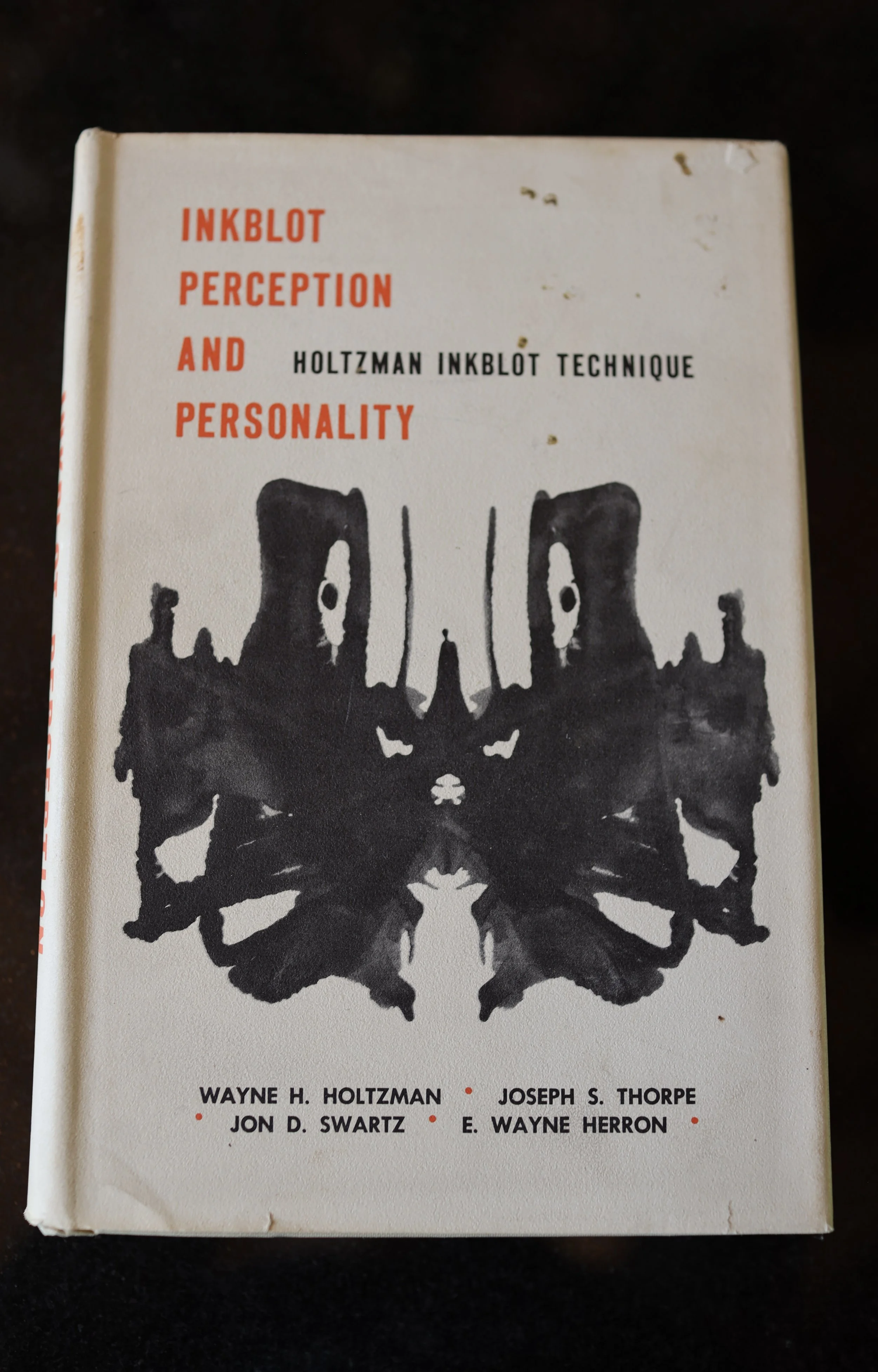 Image 1 of 7
 Image 2 of 7
 Image 3 of 7
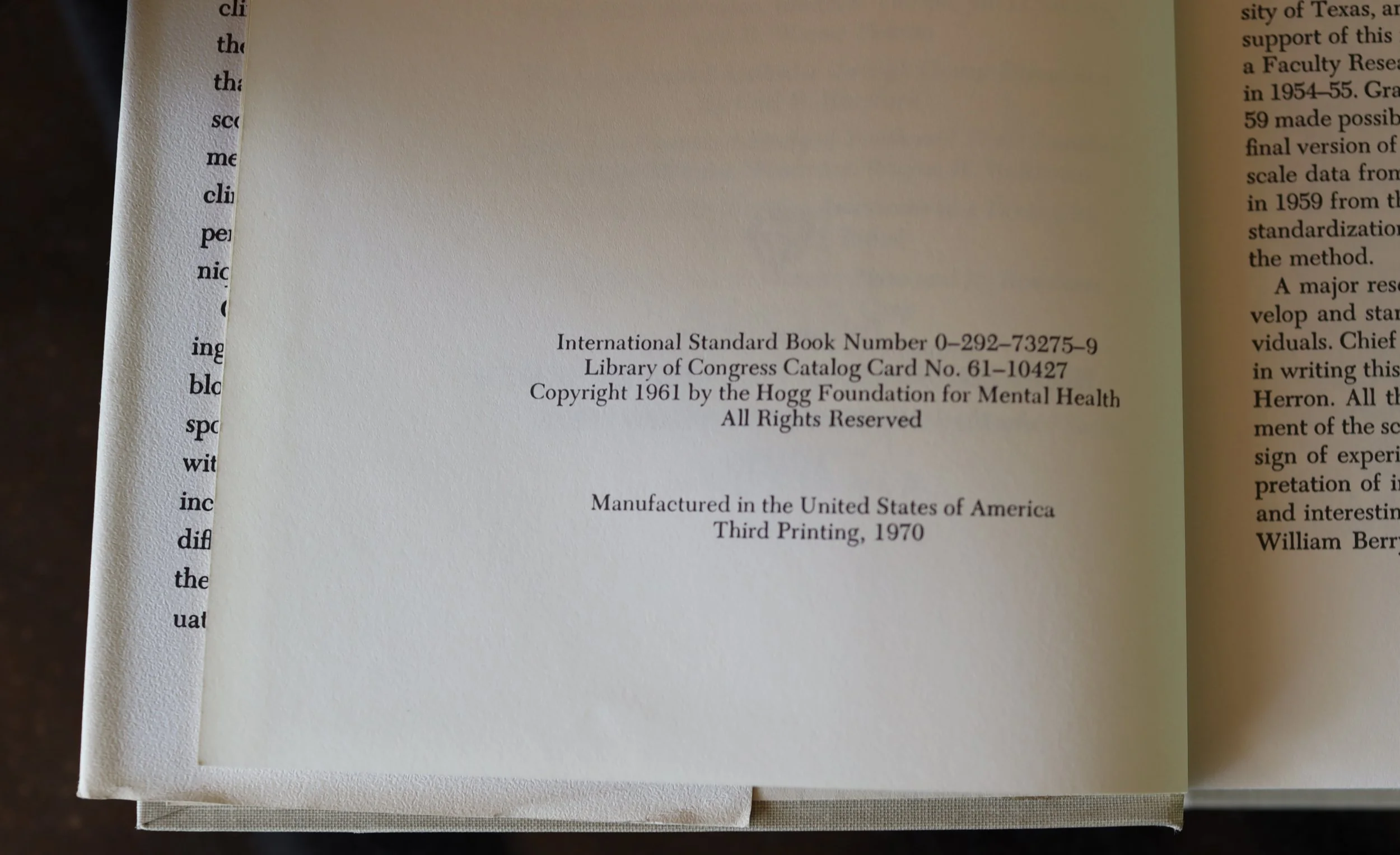 Image 4 of 7
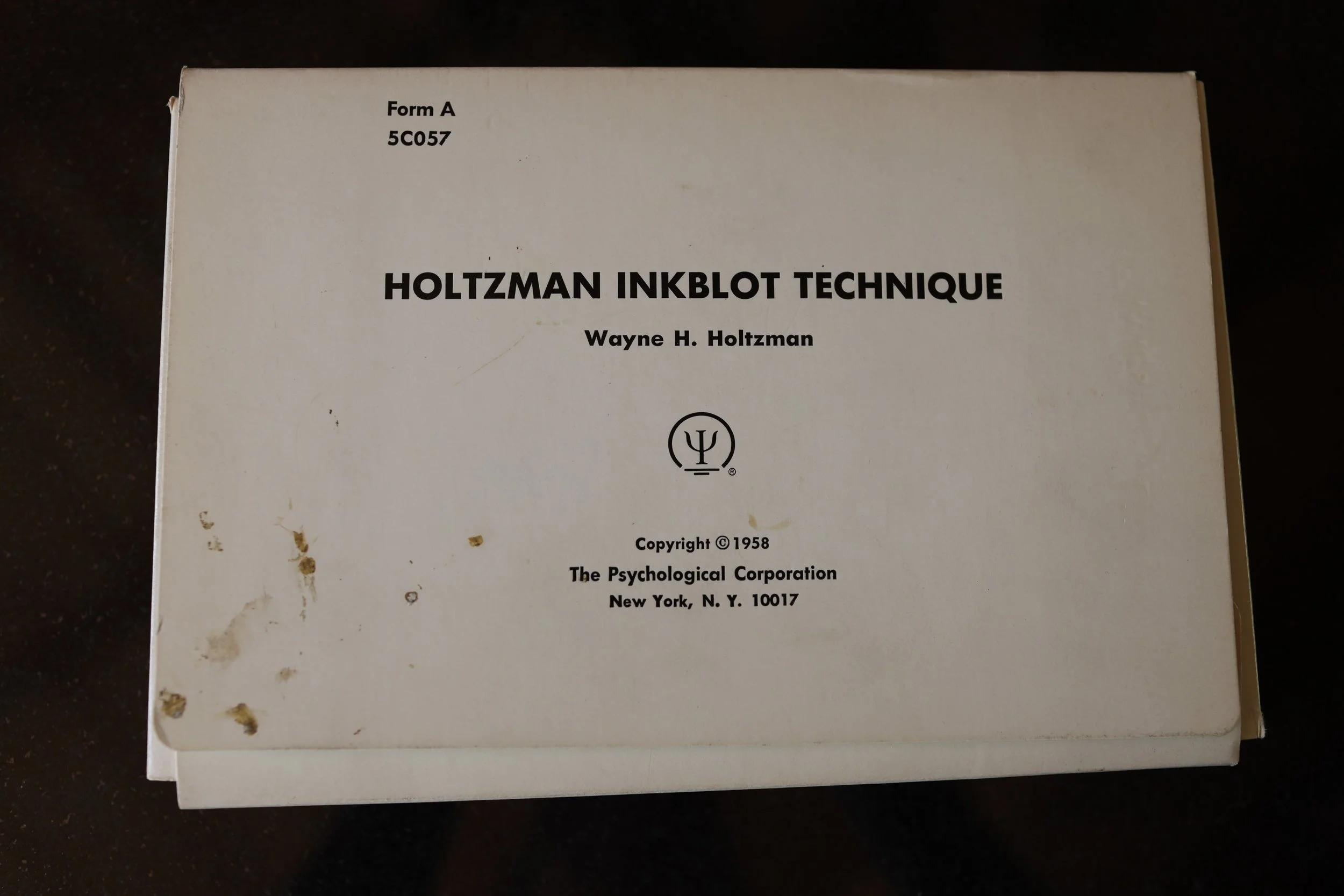 Image 5 of 7
 Image 6 of 7
 Image 7 of 7