
 Image 1 of 4
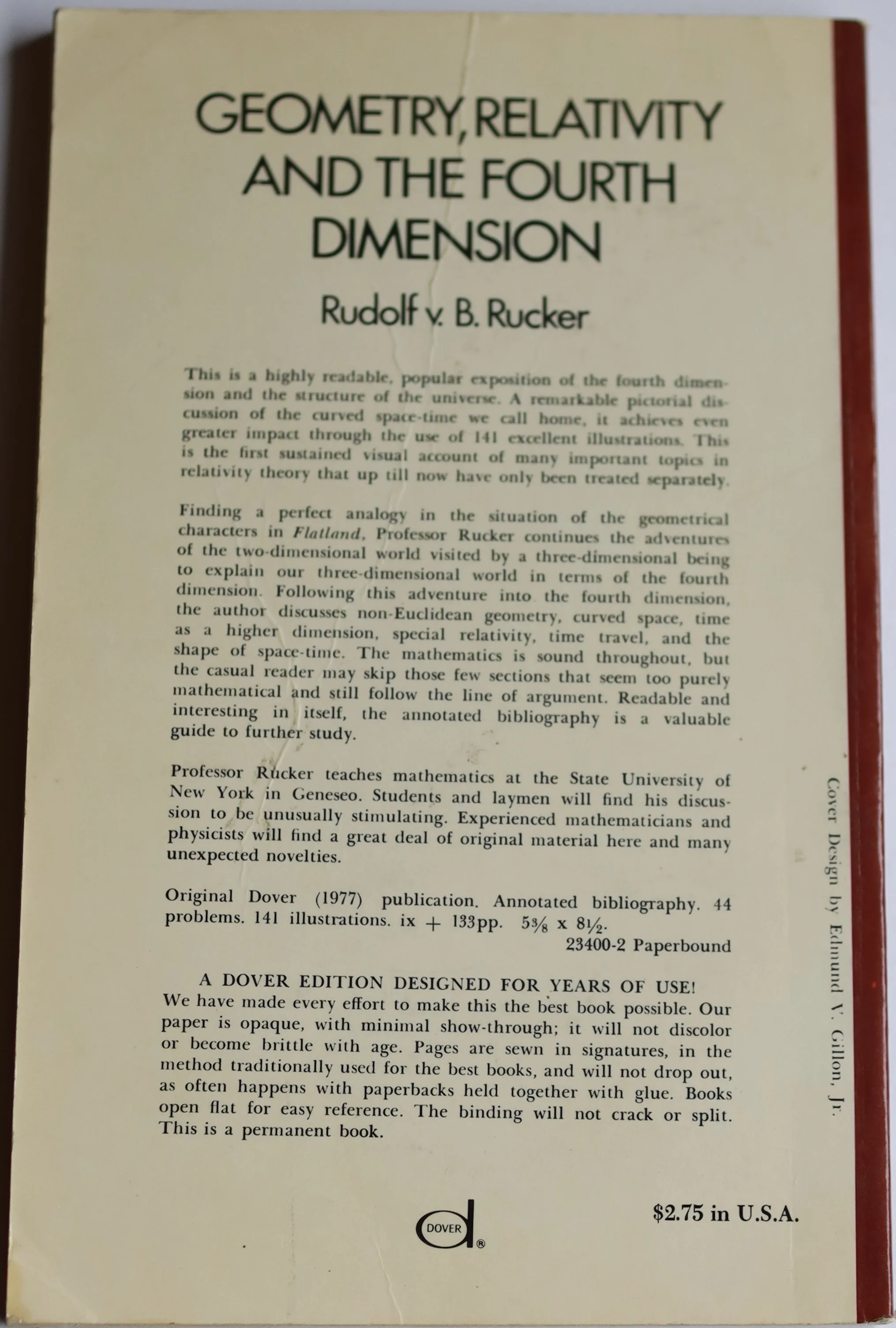 Image 2 of 4
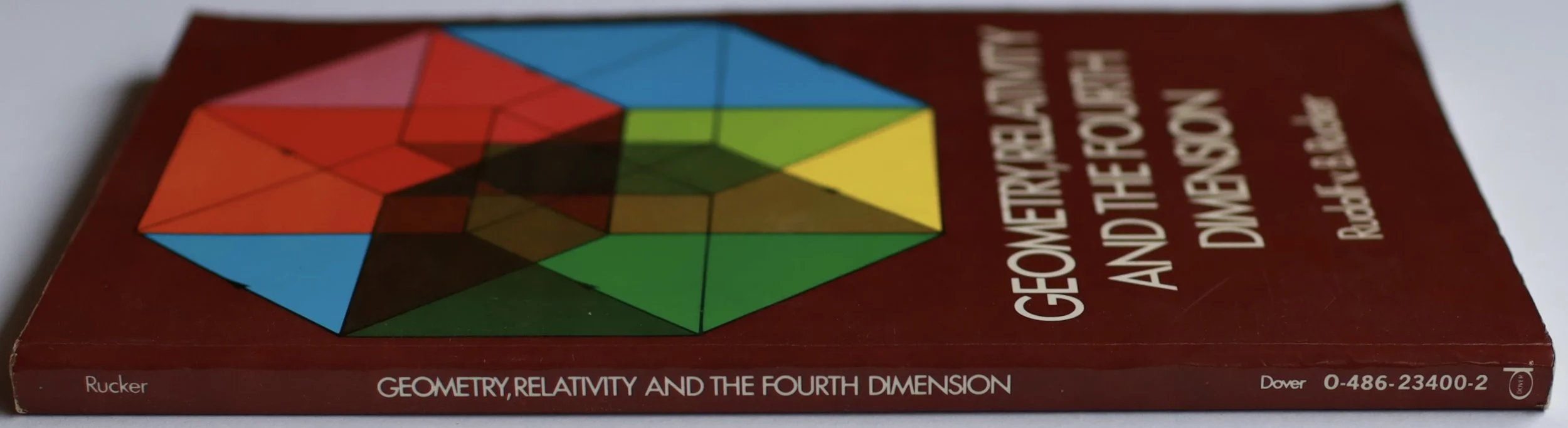 Image 3 of 4
 Image 4 of 4
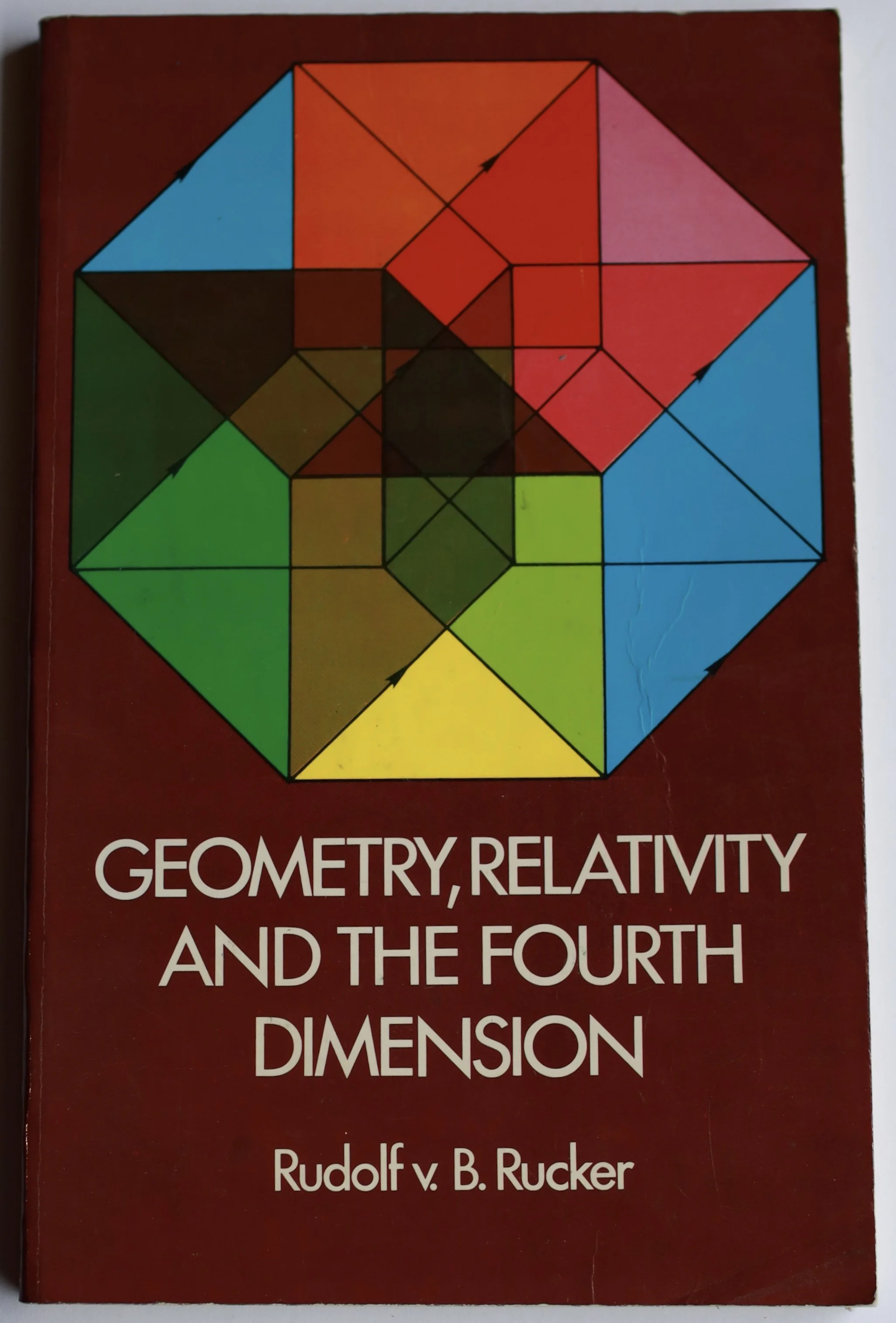
Geometry, Relativity and the Fourth Dimension — Rudolf v. B. Rucker (Dover, 1977)
A classic popular-mathematics work by cult author Rudolf v. B. Rucker, blending geometry, relativity, and higher dimensions into a highly visual and intuitive exploration of space and reality. Long admired by artists, mathematicians, and science-fiction readers alike. Dover paperback edition, 1977. A landmark book for anyone curious about how math reshapes perception.
Why this is cool (actually cool, not polite cool):
Rucker is the bridge figure between hard mathematics and counterculture sci-fi. He’s not just explaining math — he’s translating reality.
This book is famous for making higher-dimensional geometry feel visual and trippy without dumbing it down. Artists, architects, programmers, and psychedelic philosophers all love it for the same reason.
The Dover edition is especially beloved because it’s affordable, dense, and meant to be used, not locked in a glass case.
This book regularly shows up on:
“Books that changed how I think”
“Math books for non-mathematicians who are secretly very smart”
Reading lists for people who later go on to make generative art, weird software, or experimental fiction
First Dover paperback edition, 1977
ISBN: 0-486-23400-2
Clean interior, honest shelf wear
Geometry, Relativity and the Fourth Dimension — Rudolf v. B. Rucker (Dover, 1977)
A classic popular-mathematics work by cult author Rudolf v. B. Rucker, blending geometry, relativity, and higher dimensions into a highly visual and intuitive exploration of space and reality. Long admired by artists, mathematicians, and science-fiction readers alike. Dover paperback edition, 1977. A landmark book for anyone curious about how math reshapes perception.
Why this is cool (actually cool, not polite cool):
Rucker is the bridge figure between hard mathematics and counterculture sci-fi. He’s not just explaining math — he’s translating reality.
This book is famous for making higher-dimensional geometry feel visual and trippy without dumbing it down. Artists, architects, programmers, and psychedelic philosophers all love it for the same reason.
The Dover edition is especially beloved because it’s affordable, dense, and meant to be used, not locked in a glass case.
This book regularly shows up on:
“Books that changed how I think”
“Math books for non-mathematicians who are secretly very smart”
Reading lists for people who later go on to make generative art, weird software, or experimental fiction
First Dover paperback edition, 1977
ISBN: 0-486-23400-2
Clean interior, honest shelf wear